



The N.E.T. Program Award Committee is pleased to announce PhD student Hongping Sun as a recipient of the 2026 N.E.T. Award for Research Excellence. For Sun, the award recognizes her research achievements while encouraging her to continue pursuing innovative work that addresses pressing urban and environmental challenges.
Working under the supervision of Professor Chenghe Guan in the Shanghai Key Laboratory of Urban Design and Urban Science (LOUD), Sun studies the intersection of urban ecology, climate resilience, and human well-being. By integrating social media data, urban morphology, and climate information, she investigates how people perceive urban thermal environments and how cities can better support public health and environmental sustainability.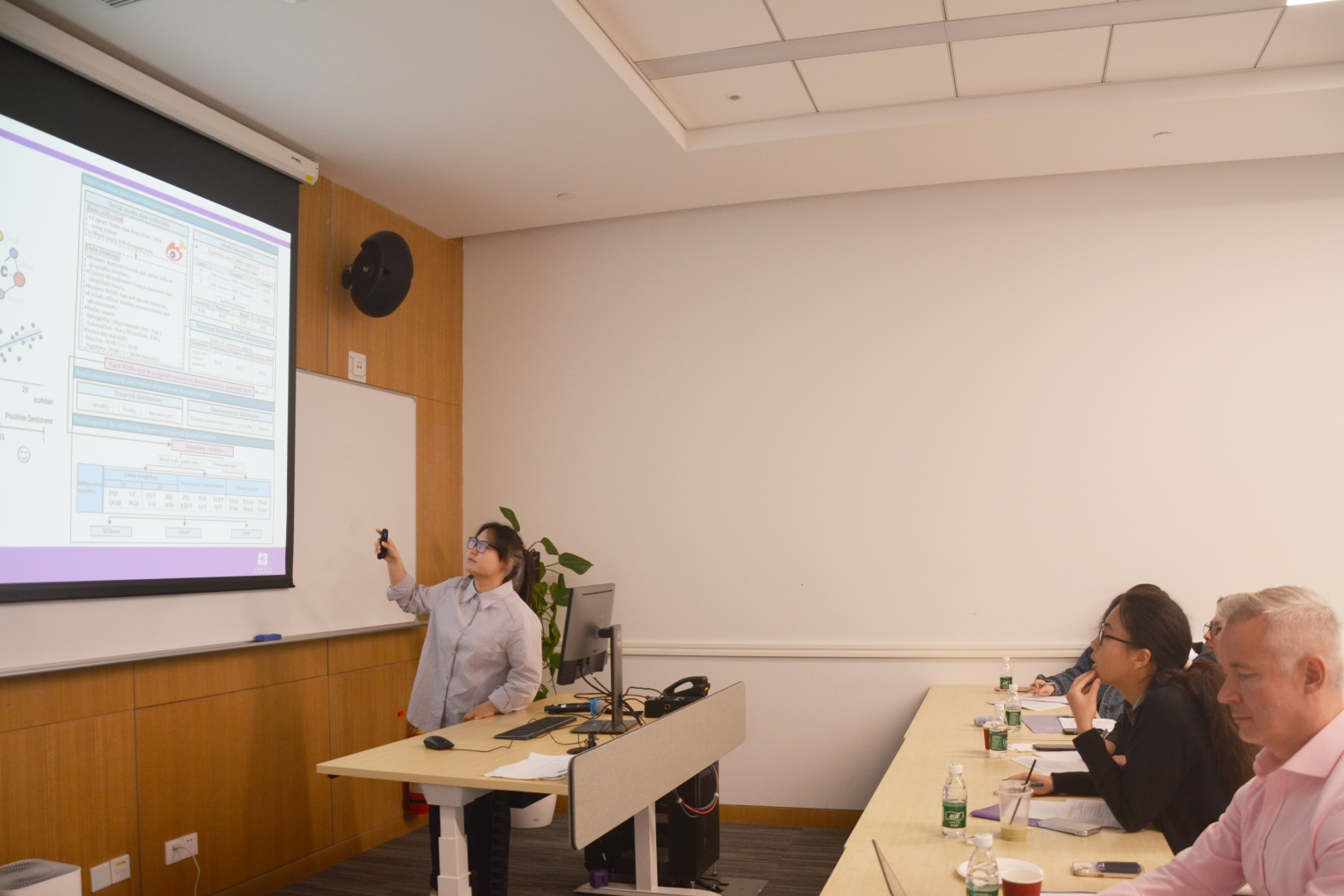
A major focus of Sun’s research is understanding human thermal comfort in cities. Using large-scale geotagged social media data and natural language processing, she examines how residents experience urban heat under different environmental conditions. One of her key findings is that thermal comfort depends on much more than temperature alone. By analyzing more than 70,000 geotagged Weibo posts in Shanghai, she found that climate conditions, urban form, and daily activities all shape people’s perceptions. Areas with greater vegetation cover, better access to green and blue spaces, and more favorable urban design characteristics were consistently associated with higher levels of perceived comfort.
“These findings suggest that improving urban design can enhance both well-being and climate resilience,” Sun says. “As cities continue to face increasing heat risks associated with climate change, understanding how people actually experience urban environments becomes increasingly important.”
Sun’s interest in environmental research developed gradually during her undergraduate and master’s studies. Inspired by questions surrounding urban systems and environmental inequalities, she chose to pursue research connecting ecological processes with human experiences.
Transitioning from microecology during her master’s studies to urban ecology in her PhD required mastering new analytical methods, including spatial analysis, programming, machine learning, and natural language processing. “Initially, the transition felt overwhelming because of the differences in scale and methodology,” she recalls. “However, I gradually realized that scientific training is highly transferable. The ecological thinking and research skills I developed earlier provided a strong foundation for tackling new challenges.”
Sun credits Professor Chenghe Guan for fostering both independence and academic growth. “One of the things I appreciate most is the freedom Professor Guan gives students to explore their own research interests,” she says. “Rather than directing us toward predetermined answers, he encourages us to ask meaningful questions, think critically, and develop innovative approaches.”
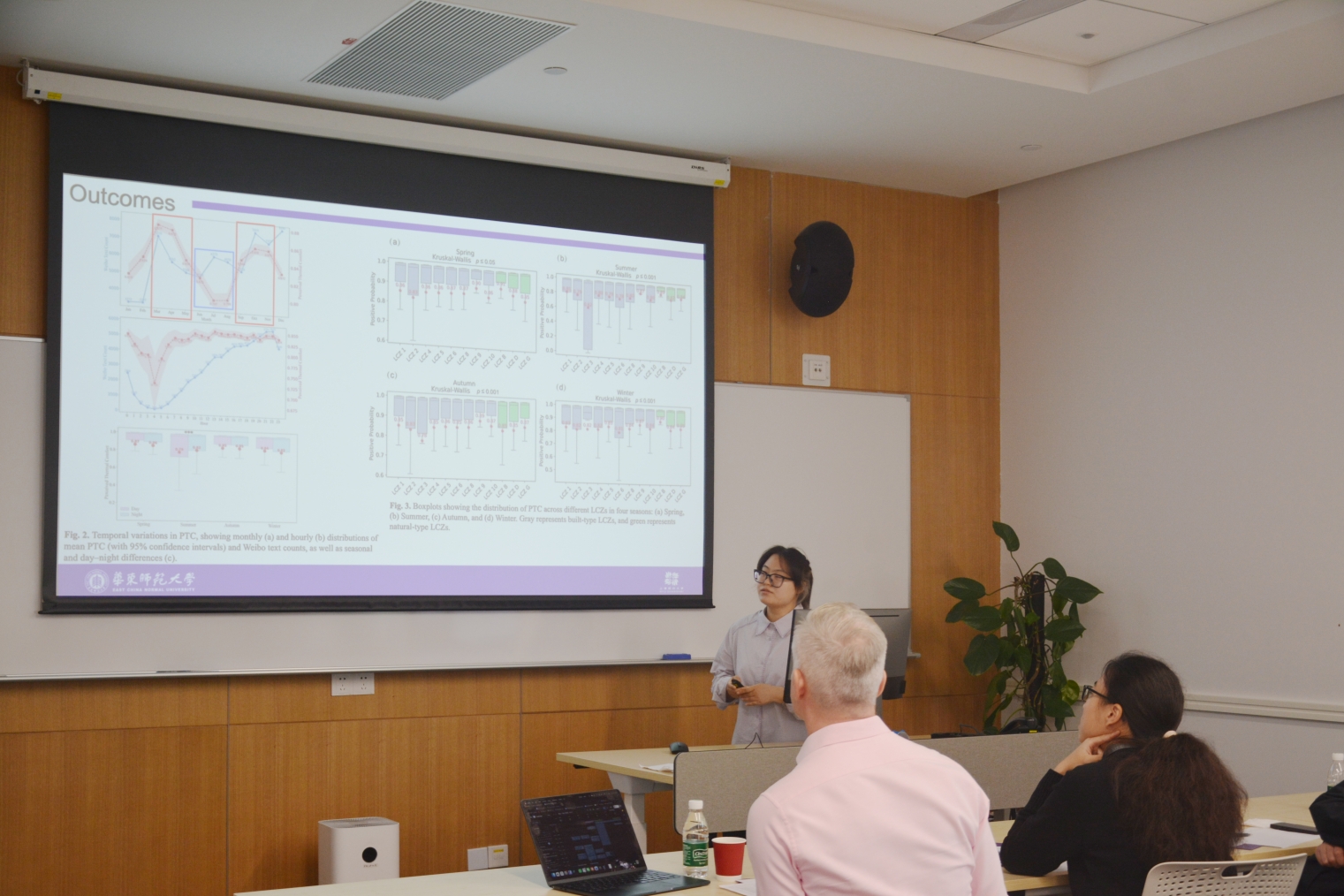
She also values the interdisciplinary environment of the NYU Shanghai–ECNU Joint Graduate Training Program, which has enabled her to collaborate across fields including ecology, urban planning, geography, psychology, and data science. Beyond research, Sun has actively contributed to the N.E.T. community by organizing workshops on IELTS preparation and China Scholarship Council (CSC) applications. She believes scientific progress is strengthened by collaboration, openness, and mutual support.
Receiving the 2026 N.E.T. Award for Research Excellence has further strengthened Sun’s commitment to pursuing impactful research. Looking ahead, she hopes to continue exploring questions at the intersection of urban ecology, climate adaptation, and human well-being. “As climate change and extreme heat increasingly affect cities around the world, I hope my work can contribute to creating healthier, more equitable, and climate-resilient urban environments,” she says. “This recognition motivates me to continue developing innovative research and using science to address real-world challenges.”
The N.E.T. Award Committee congratulates Hongping Sun on this achievement and looks forward to her continued contributions to advancing urban sustainability and human-centered environmental research.