


Urban ecology is one of many exciting research focuses at NYU Shanghai. Taking full advantage of NYU Shanghai’s interdisciplinary environment and making creative use of diverse research tools, young scientists at NYU Shanghai extended their research work to the frontiers of global academia to create a new model of graduate student training, The NYU Shanghai-ECNU Joint Graduate Training Program (N.E.T.).
Established jointly by NYU Shanghai and ECNU, N.E.T enables its students to benefit from the rich research, network, and educational resources available from both institutions. Students communicate directly with and work alongside distinguished scholars from all over the world, access cutting-edge research tools, and expand their academic horizons to advance the future of their scientific research. Interested in urban ecology from the perspective of urban science and the digitalization of smart cities? Let’s take a closer look at Professor ChengHe Guan’s lab.
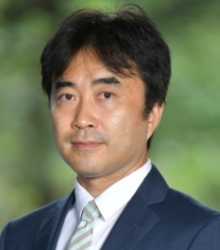
Professor ChengHe Guan
ChengHe Guan is an Assistant Professor of Urban Science and Policy, Ph.D. supervisor, and the Director of the NYU Shanghai Urban Lab. He is a core member of the NYU Shanghai Center for Data Science and Artificial Intelligence and a Global Network Assistant Professor at the NYU Wagner Graduate School of Public Service. He also serves as a research consultant at the Centre on Migration, Policy and Society at the University of Oxford and as a senior visiting researcher at the John A. Paulson School of Engineering and Applied Sciences at Harvard University. He is the Director of the International Urban Innovation Research Center at the Yangtze River Delta Institute of Business Innovation. ChengHe Guan received his master's and doctoral degrees from the Department of Urban Planning and Design at Harvard University and was a Pollman Scholar at Harvard University Graduate School of Design, and a consultant for the World Bank. Members from Professor Guan’s research team have been accepted into Harvard University, the University of Pennsylvania, the University of Oxford, the University of Cambridge, and the Swiss Federal Institute of Technology to continue their studies and research. After joining NYU Shanghai, Professor ChengHe Guan established the NYU Shanghai Urban Lab in 2019.
The Urban Lab
The main research direction of the Urban Lab is in understanding the construction and transformation of digital smart cities. Approaches include topics such as: using healthy cities and big data with artificial intelligence to study urban morphology, applying urban sentiment analysis to studying the transformation of digital and smart cities, and integrating multi-disciplinary approaches into studying urban ecology under the urban science system, among others.
Since 2019, the lab has generated fruitful research findings, amounting to nearly 30 publications. Representative results include studies such as: Are People Happier in Locations of High Property Value? Spatial Temporal Analytics of Activity Frequency, Public Sentiment and Housing Price Using Twitter Data, published in Applied Geography; Comparing Tweet Sentiment in Megacities Using Machine Learning Techniques: In the Midst of COVID-19, published in internationally renowned journal Cities, and Seasonal Variations of Park Visitor Volume and Park Service Area in Tokyo: A Mixed-Method Approach Combining Big Data and Field Observations, published in Urban Forestry & Urban Greening.
The laboratory is committed to cultivating scholars in the field of digital transformation of future cities, and the lab has drawn a number of young scholars, including post-doctoral fellows, graduate students, and undergraduates who are all actively pursuing exciting new research.
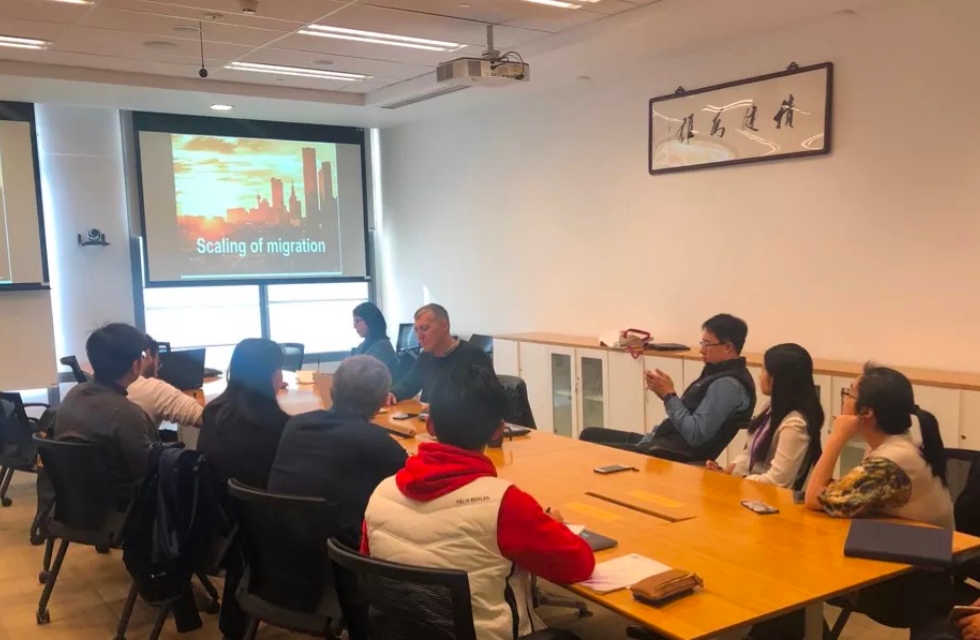
Research Highlights
"The Analysis of Smart City Emotional Systems in the Context of Digital Transformation" is a research project recently launched by the lab in cooperation with the Shanghai Academy of Social Sciences and the International Urban Innovation Research Center at the Yangtze River Delta Institute of Business Innovation. The research team uses data from a variety of social media platforms to study and analyze the temporal and spatial changes of urban sentiment across the country and investigate its correlation with epidemic prevalence, policy conditions, and vaccination rates. The COVID-19 pandemic has made the assessment of urban sentiment a particularly valuable and necessary area of research for policy making and urban management, and the significance of this research has become increasingly prominent. In another recent project, the lab has also cooperated with researchers from the University of Tokyo and Harvard University to conduct in-depth research on the number of visitors to Tokyo's urban green spaces and the seasonal variations in park service coverage areas. Urban green and open spaces are crucial for achieving the goal of planning sustainable cities that provide socio-economic and environmental benefits to society and offer health benefits to urban dwellers. This research aims to empirically show the seasonal variations of park visits and examine links between park visit patterns and spatial characteristics of case study parks using a combination of big data from mobile phones and field surveys.
The Uniqueness of the Lab and the Scientific Research Experience of Students
From a graduate student’s perspective, can you talk about the uniqueness of Professor Guan’s Lab?
Junjie Tan: After graduation, I continued my urban study research in the NYU Shanghai Urban Lab. I have had many opportunities here to use urban big data to understand urban systems through an innovative methodology. Supported by Professor Guan and several other internal research grants, I gradually constructed an urban big data library from multiple sources and conducted research on the spatiotemporal analytics of activity frequency, public sentiment and housing price using Twitter data. This project highlighted the significance of using urban crowdsourced data in the analysis of urban morphology and the modeling of population changes.
Tong Cheng: As a Geographic Information System (GIS) major, I can fully utilize my professional expertise in the NYU Shanghai Urban Lab when collecting and constructing city datasets and relying on various city models to predict the temporal and spatial changes of future urban morphology. Based on detailed data, we can then grasp the macro changes of the city and obtain research results that can be used as an important reference for decision makers. In Professor Guan's laboratory, students can utilize new technology and make their ideas come to fruition.
After starting your research career in Professor Guan’s Lab, what has been your most impressive research experience?
Yuanzhao Wang: Overall, it has been quite an amazing journey from the time when I first met Professor Guan, many years ago. I’ve evolved from an architecture student keen on drawing to an urban researcher who grasps the fundamental understanding of urban systems. I wouldn’t have been able to navigate this transition without the inspiration and facilitation Professor Guan has provided. But still, I know it is only the beginning. Within the next decades of my career, I will pursue a profound academic pathway that will further sharpen my research proficiency and advance my understanding in the field of population mobility and urban systems. I am determined to devote myself to the development of better cities, push the boundaries of knowledge in the field, and make creative contributions that will help shape our society for the better.
Junjie Tan: Efficiency is a key word that encapsulates my research experience in Professor Guan’s lab. Regular online communications and study with Professor Guan—who is always nice—have been the boosters of my scientific research. I am very grateful to have met t good mentors in my field, and under Professor Guan’s leadership, our team’s cooperation with other international teams has both broadened my horizons and increased my knowledge. I hope that I will make more unexpected gains and breakthroughs in my scientific research and continue to do more interesting work in simulating urban morphology.